
The Federal Government has called for a transition from supply-driven agricultural extension services to a demand-driven system that provides farmers with verified information tailored to their specific needs and market requirements.
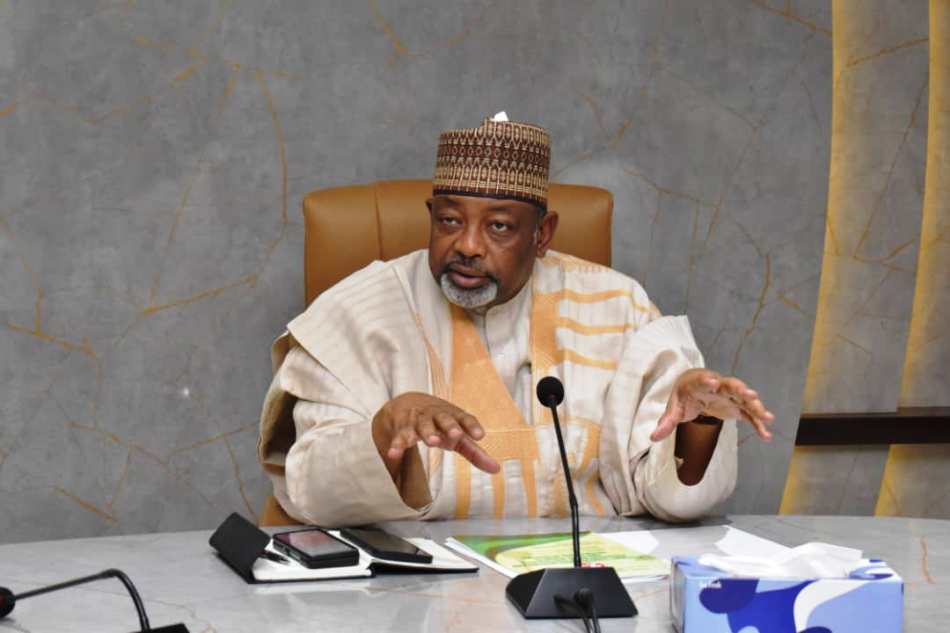
Minister of Agriculture and Food Security, Sen. Abubakar Kyari, made the call on Wednesday at the Africa Agribusiness Extension Summit, where stakeholders discussed strategies for building sustainable agricultural advisory infrastructure across the continent.
Kyari said the development of effective extension systems must begin with a clear understanding of farmers, their production needs and the markets they serve.
According to him, agricultural information should be driven by farmers’ demand rather than a system that merely supplies knowledge without considering users’ needs.
“We must develop a demand-driven extension system,” the minister said.
He explained that farmers seeking advice should be linked to verified and certified extension agents to reduce the spread of inaccurate information and build trust in agricultural advisory services.
Kyari warned that the rapid growth of digital content and artificial intelligence had increased the risk of misinformation in agriculture.
“There is information overload as we have it today. Another danger is artificial intelligence. People can create phantom farms, produce phantom knowledge and give you phantom realities,” he said.
The minister said repeated access to accurate and reliable information would strengthen confidence in extension services and improve the integrity of the agricultural information ecosystem.
He stressed that effective extension services must also be linked to market opportunities, noting that farmers need to understand market requirements before production, particularly for export commodities.
Kyari cited sesame and hibiscus as examples of Nigerian commodities with strong export demand, but warned that inadequate knowledge of market standards could lead to product rejection and financial losses.
He said advisory services should begin with market requirements by helping farmers understand buyers’ expectations, quality standards and reasons products may be rejected.
According to him, extension services should support farmers throughout the production cycle, from site selection and land preparation to input application, weed control and harvest management.
The minister also identified traceability as a critical requirement for accessing local and international markets, saying extension systems should help farmers understand and meet traceability standards.
Kyari said Nigeria’s agricultural advisory infrastructure must reflect the country’s diverse agroecological zones, noting that different farming systems require location-specific information.
He described Nigeria as having one of Africa’s most diverse agroecologies, ranging from the Sahel and Sudan Savannah to forest, mountain and mangrove ecosystems.
“All of these demand different ways of doing agriculture, and the kind of information you package for farmers determines their success,” he said.
The minister noted that food security had become a national priority, following constitutional amendments recognising access to food as part of the directive principles of state policy.
He also disclosed that the curriculum for diploma and Higher National Diploma agricultural programmes had been revised to increase practical training.
According to him, practical work will now account for 70 per cent of course content in agricultural programmes offered by federal colleges of agriculture.
Kyari stressed the need for mechanisms to verify agricultural information before it reaches farmers and to ensure accountability for inaccurate advice.
He urged stakeholders to place farmers at the centre of efforts to develop sustainable agricultural advisory systems.
Using cassava production as an example, the minister said Nigeria remained the world’s largest producer of cassava, with more than 63 million metric tonnes annually, but noted that productivity per hectare remained low compared to achievable yields.
He attributed the gap largely to differences in knowledge, agronomic practices and access to reliable extension services.