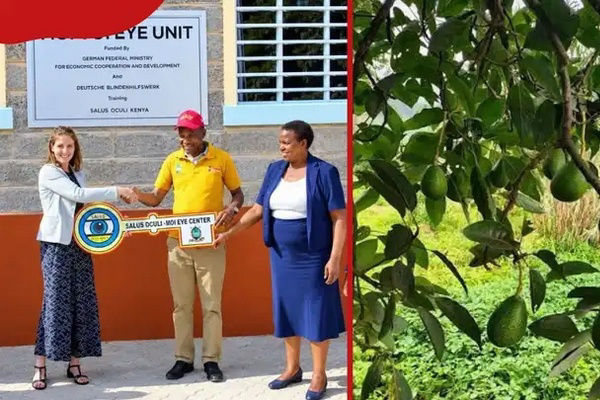
Abel Ndiga Kararel, a 71-year-old blind farmer in Kiamurunga village, Kirinyaga Central, Kenya, earns more than KSh1.12 million (US$8,700) annually from 464 Hass avocado trees on his 2.8-hectare orchard.
The farm produces about 14 tons of avocados a year, with Kararel receiving approximately KSh80 (US$0.62) per kilogram.
Kararel previously kept dairy cattle but turned to avocado farming after losing his sight made dairy management difficult. In 2016, he planted his first 30 Hass trees with seedlings sourced from Nyeri and later expanded the orchard to 464 trees.
He improved his orchard management skills through training from agrochemical companies and agricultural extension officers.
“You get paid on the farm. It requires less time and manpower and can be practised by anyone as long as you have the best tree,” Kararel said.
The farm employs workers for orchard activities, while Kararel shares his experience with other avocado growers in Kirinyaga.
He cites counterfeit agricultural chemicals and limited knowledge of avocado production as major challenges, and calls for stronger extension services to help farmers meet export market requirements.
Kenyan Hass avocados are exported to markets in Asia, Europe and the Middle East. For smallholders, access to markets and quality seedlings, good agronomic practices and proper post-harvest handling remain important factors affecting returns.