
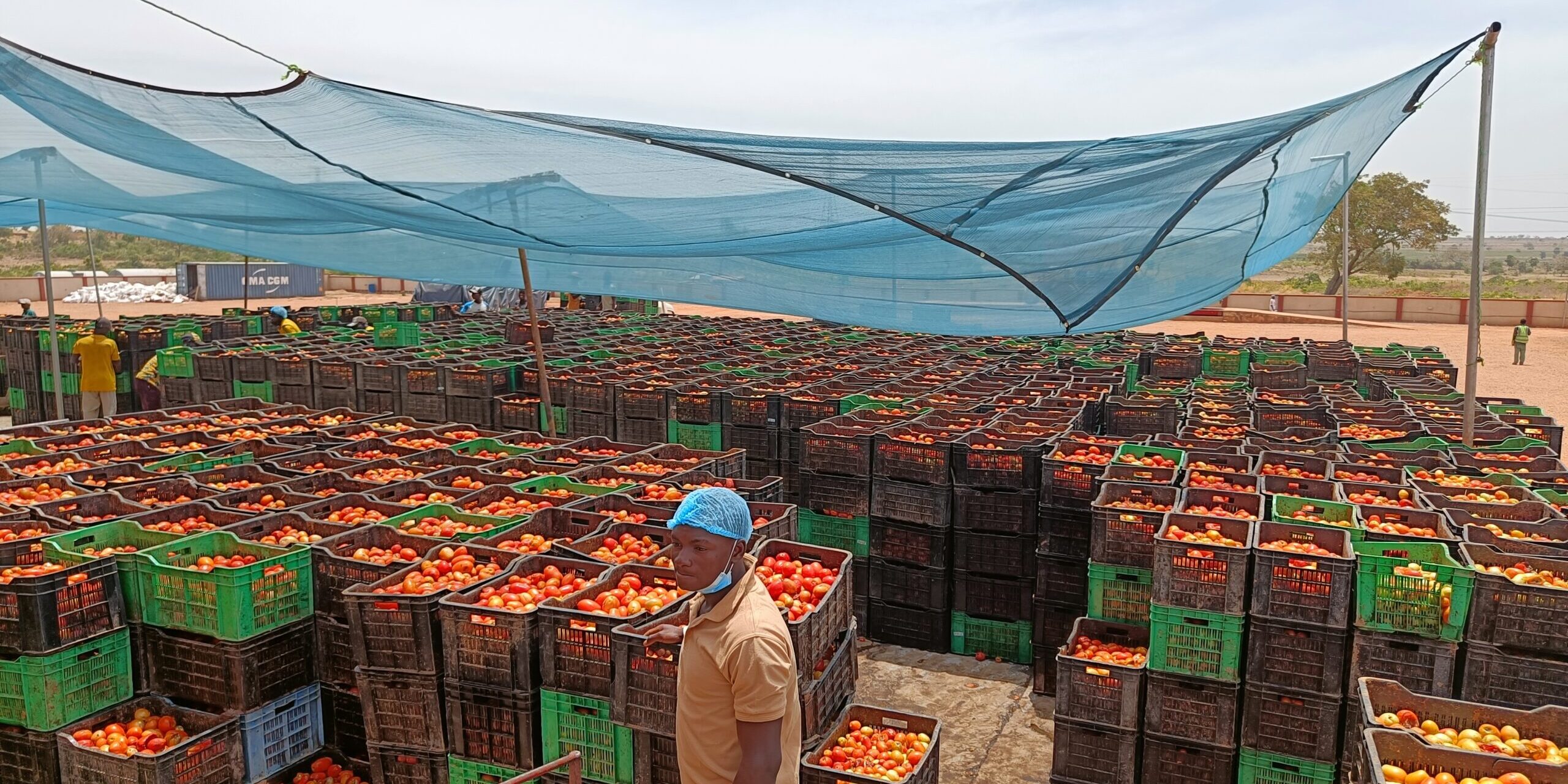
The EU-funded Agriculture Financing Initiative (AgriFI) has invested $2.5 million in Tomato Jos Incorporated to support the expansion of climate-smart tomato production and processing in northern Nigeria.
The investment, disclosed by Modestus Chukwulaka, press officer for the European Union Delegation to Nigeria and ECOWAS, will be managed by the European Development Finance Institutions Management Company (EDFI MC) through AgriFI’s African, Caribbean and Pacific (ACP) Regional Window.
The convertible-note investment will enable Tomato Jos, a vertically integrated tomato farming and processing company, to expand its product range, reduce production costs and strengthen its engagement with smallholder farmers.
According to the EU, Tomato Jos plans to produce and distribute consumer-packaged tomato paste across Nigeria by combining its own farming operations with smallholder sourcing and local processing.
More than half of the company’s raw materials are currently sourced from smallholder farmers in Kaduna State.
EU Ambassador to Nigeria and ECOWAS, Gautier Mignot, said the investment demonstrated Nigeria’s potential to create jobs, strengthen food security and develop resilient agricultural value chains.
He said the investment would support a Nigerian business creating local value from farm production to finished consumer products, while mobilising private investment in inclusive and climate-smart agriculture.
The financing will support the acquisition of packaging equipment, factory upgrades and the expansion of drip irrigation infrastructure.
It will also enable Tomato Jos to introduce additional product formats and target new customer segments, including business-to-business and hotel, restaurant and catering (HORECA) markets.
The investment is expected to improve the economics of local tomato processing by reducing energy and production costs.
EDFI MC Chief Executive Officer Rodrigo Madrazo said Tomato Jos combines a commercial business model with development objectives by connecting farmers to reliable markets while providing access to land, irrigation, inputs and technical support.
He said AgriFI’s investment would finance targeted improvements in drip irrigation and packaging capacity, while supporting product expansion, lower production costs and further private investment.
Tomato Jos expects annual fresh-tomato production to increase to about 16,000 tonnes by 2029, from slightly more than 4,500 tonnes currently.
The company also plans to increase the number of smallholder farmers it works with from about 500 to 1,500 by 2029 and raise income per farmer by more than 150 per cent between 2024 and 2029.
Tomato Jos Chief Executive Officer Mira Mehta said the investment would help the company strengthen the tomato value chain in northern Nigeria by expanding production and market reach, lowering energy costs and reducing its carbon footprint.
She said the company also aims to make high-quality locally produced tomato paste more accessible to Nigerian consumers while creating more reliable economic opportunities for farming communities.
According to the statement, Tomato Jos’ operations contribute to food security and import substitution by reducing post-harvest losses and increasing the availability of locally processed tomato paste.
The investment is also expected to help catalyse a $6 million equity round in 2028, representing an anticipated leverage factor of 3.2 times.
EDFI MC is a multilaterally owned impact asset manager that develops and manages blended-finance facilities designed to mobilise private investment in sustainable development.
AgriFI is an EU-funded impact investment facility managed by EDFI MC to unlock and leverage sustainable investment in agricultural small and medium-sized enterprises in developing countries, with a focus on including smallholder farmers.
The AgriFI ACP Regional Window supports entities operating in selected agricultural value chains across African, Caribbean and Pacific countries, in partnership with the Organisation of African, Caribbean and Pacific States Secretariat.
-NAN