
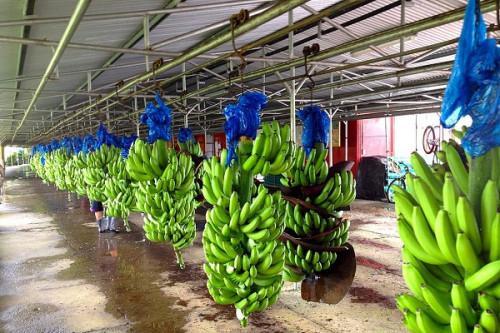
The European Union invested €48.1 million (US$56.4 million) in Cameroon’s banana sector between 2013 and 2024 under the Banana Accompanying Measures Programme, aimed at helping the industry remain competitive following reductions in EU tariffs.
The funding supported major producers including Plantations du Haut Penja (PHP), Cameroon Development Corporation (CDC) and Boh Plantations Limited (BPL), as well as sector and research organisations.
The programme contributed to improvements in productivity and post-harvest handling. At PHP, yields stabilized at 46 tonnes per hectare, while post-harvest losses fell from 22 per cent to 11 per cent and export prices increased by 15 per cent.
BPL recorded a 96 per cent increase in export volumes, while CDC’s yields rose from 27 to 40 tonnes per hectare. Post-harvest losses at CDC also declined from 21 per cent to 8 per cent.
Overall, Cameroon exported 2.533 million tonnes of bananas during the programme period.
The EU-backed initiative also supported infrastructure development, including improvements at the mixed fruit terminal in Douala. The number of refrigerated power outlets at the facility increased by 169 per cent, while a 3-megawatt power plant was installed.
However, efforts to diversify Cameroon’s banana export markets recorded limited progress. A planned component focused on alternative logistics, new markets and the development of a “Banane Afrique” label was not implemented.
As a result, Europe remains overwhelmingly dominant, receiving between 98 and 99 per cent of Cameroon’s banana exports.
Research activities also faced setbacks following the end of a grant agreement with the Centre for African Research on Bananas and Plantains (CARBAP) in October 2018. Among the affected areas was research into Tropical Race 4 (TR4), a strain of Fusarium wilt that threatens banana production.
The programme’s evaluation recommends renewed research into banana varieties resistant to TR4 as part of efforts to strengthen the sector’s long-term resilience.
For future EU support, the evaluators recommend moving away from direct cultivation subsidies towards investments in infrastructure.
Proposed projects include a feasibility study for a banana quay in Limbe, a high-voltage electricity connection for plantations previously operated by BPL, and rehabilitation of roads in the Southwest Region and along the Moungo-Douala corridor.
The evaluation also recommends exploring new export opportunities in Central and West Africa, North Africa and the Middle East to reduce the sector’s dependence on European markets.
Cameroon currently has three banana exporters: PHP, Compagnie des Bananes de Mondoni and CDC.