
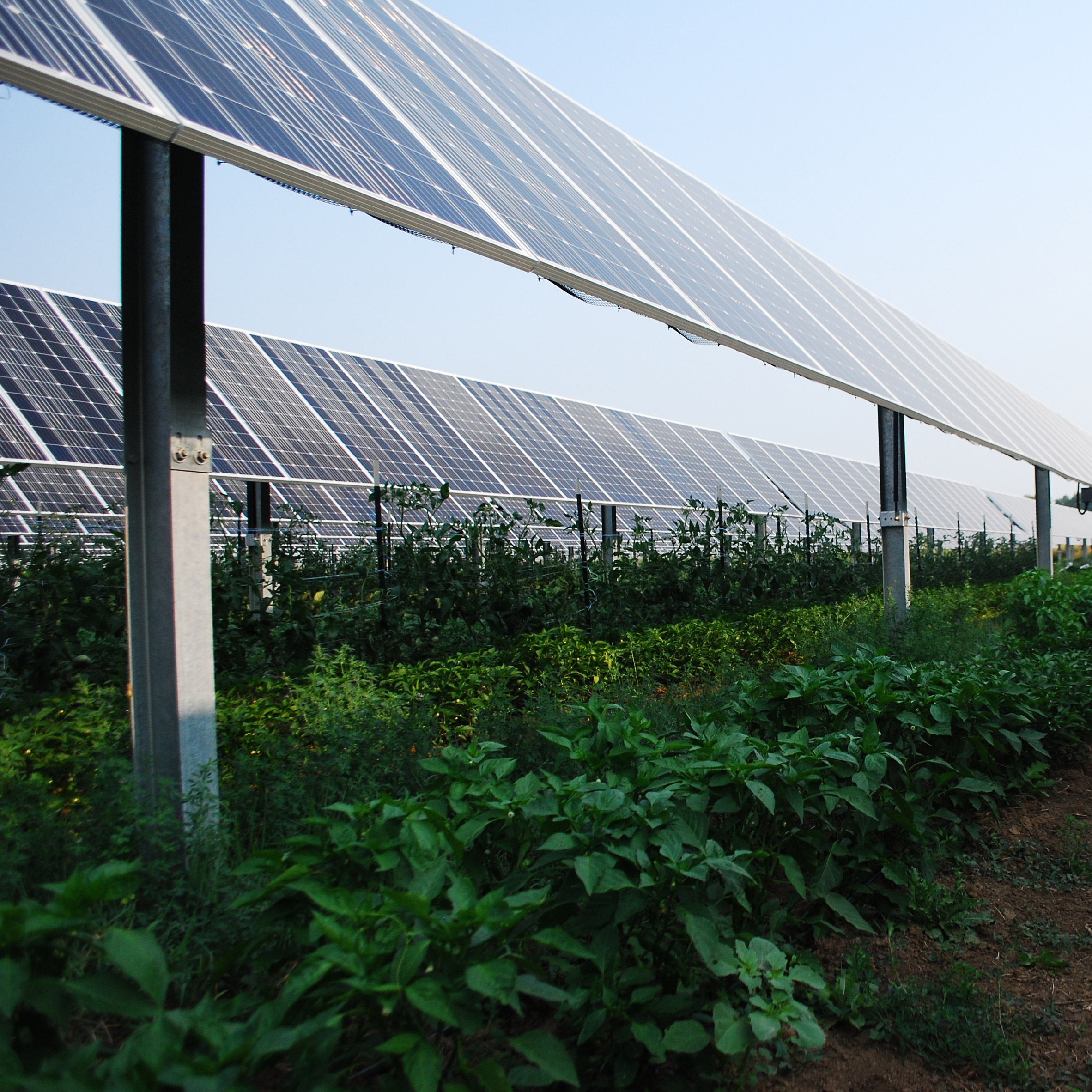
A University of Arizona study has challenged the common assumption that vegetables always perform best under full sunlight, finding that some crops can benefit from the shade created by solar panels.
Researchers led by biogeographer Greg Barron-Gafford conducted the experiment at Biosphere 2 near Tucson, Arizona, growing chiltepin peppers, cherry tomatoes and jalapeños both beneath solar panels and in open sunlight.
The results showed significant differences among the crops. Chiltepin peppers produced about three times more fruit under the solar panels, while cherry tomatoes produced roughly twice as much compared with plants grown in full sun.
Jalapeños, however, produced similar yields in both conditions. Their major benefit was water efficiency: plants grown beneath the panels used 65% less water through transpiration while maintaining comparable fruit production. Soil beneath the panels also remained about 15% wetter between irrigation cycles.
The findings highlight the potential of agrivoltaics, a farming approach that combines agricultural production with solar energy generation on the same land.
Agrivoltaics could be particularly valuable in hot and dry regions, where farmers face increasing pressure to conserve water while land is also needed for renewable energy production. However, researchers caution that the results should not be treated as universal, since crop responses to shade can vary depending on the plant, climate and growing conditions.
The study suggests that, for some crops, solar panels may provide more than clean energy—they can also create a growing environment that reduces heat and water stress.