





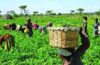

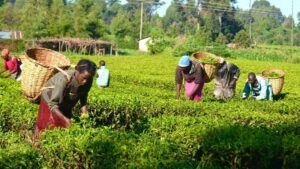
 The event brought together government officials, development partners, members of the diplomatic corps, financial institutions, private-sector representatives, farmers’ organisations and women farmers to discuss ways to remove barriers to women’s participation and leadership in agriculture.
In his remarks, the IOC FAO Representative in Nigeria and to the Economic Community of West African States (ECOWA), Jimmy Owani, said women constitute about 41 per cent of the global agrifood workforce and play critical roles as farmers, livestock keepers, fishers, processors, traders, entrepreneurs, extension agents and innovators.
Owani noted that women continue to face significant inequalities in access to land, finance, technology, agricultural services, markets and decision-making opportunities.
Closing gender gaps in agricultural productivity and wages, he said, could add nearly $1 trillion to the global economy and reduce food insecurity for millions.
The organisation said the situation was particularly important for Nigeria, where agriculture contributes about 22 to 25 per cent of Gross Domestic Product (GDP), while more than 70 per cent of rural households depend on agriculture for part or all of their income and food security.
It noted that women account for an estimated 37 per cent of labour in crop production but often have less access to productive resources than men.
He said the gender gap in agricultural productivity costs Nigeria about $2.3 billion annually, equivalent to approximately two per cent of GDP.
He stressed that the issue went beyond increasing agricultural productivity, arguing that women must also be empowered to become decision-makers, investors, innovators and leaders across Nigeria’s agrifood system.
He, however, called for expanded access to finance, technology, markets and productive resources, as well as stronger support for women-led enterprises and gender-responsive policies.
The World Food Programme (WFP) said it had worked with farming communities in northern Nigeria over the past five years, reaching 128,000 women through agricultural and resilience-building interventions.
Speaking, WFP Deputy Country Director Edouard Thiam said the Programme’s support had included the provision of seeds, fertiliser and other agricultural inputs, access to equipment and storage facilities, irrigation, market linkages and the establishment of resilience hubs that bring essential services closer to farmers.
Thiam said more than 70 per cent of jobs created through its activities have gone to young women, while increased agricultural production has generated opportunities for traders, transporters and processors beyond the farm.
He also emphasised the importance of local procurement, saying that purchasing food from Nigerian farmers and businesses keeps investment within the country, sustains markets and expands rural employment.
He said WFP’s interventions would continue to focus on helping women farmers increase production, improve incomes and build stronger livelihoods.
“Investing in women farmers is not separate from investing in Nigerian agriculture. It is part of the same ambition to generate greater prosperity,” the agency said.
The International Fund for Agricultural Development (IFAD) said its investments in Nigeria had reached at least 96,827 women through three major programmes—the Value Chain Development Programme (VCDP), Livelihood Improvement Family Enterprises for Niger Delta (LIFE-ND) and Special Agro-Industrial Processing Zones (SAPZ).
Representing the IFAD Country Director, Mohamed El-Ghazaly, the agency said 87,888 women were members of supported rural producer organisations under VCDP, while 36,572 had received training in crop production technologies and 50,613 had accessed advisory services.
It added that LIFE-ND had trained 17,201 women, including those engaged in crop production and fisheries, while SAPZ had trained 5,815 women in improved crop production practices.
The agency said nearly 60,000 female household members supported through VCDP had also benefited from measures aimed at improving their resilience to climate change.
On financial inclusion, IFAD said LIFE-ND had enabled 11,003 women to access savings, 9,568 to access credit, 11,382 to access insurance and 14,654 to access financial literacy training.
Across the three programmes, more than 20,000 women had also received targeted nutrition support, it added.
IFAD stressed that women should not be treated merely as beneficiaries of agricultural programmes but as equal partners and decision-makers in transforming Nigeria’s agrifood systems.
The agency urged stakeholders to invest in women’s productive capacity, enterprises, organisations, innovations and leadership.
It also noted that the national event represented the culmination of activities organised across states through IFAD-supported programmes to create platforms for women farmers to share their experiences, achievements, challenges and aspirations.
The agency urged stakeholders to use the International Year of the Woman Farmer to move beyond recognition towards concrete action.
“To the women farmers with us today, I say: your work matters, your voices matter, and your leadership matters,” IFAD said.
The three UN agencies reaffirmed their commitment to working with the Federal Government, development partners, private-sector actors, financial institutions and women farmers to expand economic opportunities and build a more inclusive, resilient and productive agrifood system in Nigeria